
Friday Outbound Clinic “Building a Scholarship Career : Lesson From the Professional“
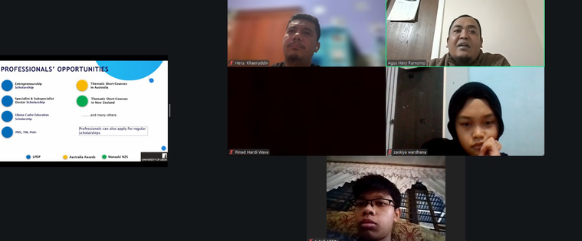
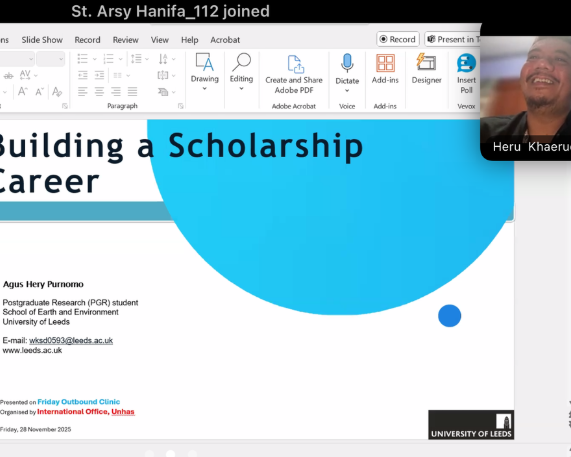
The International Office (IO) of Hasanuddin University (UNHAS) successfully held another insightful session of the Friday Outbound Clinic on 28 November 2025, featuring Agus Hery Purnomo, ST., M.DisResDev., a PhD candidate at the School of Earth and Environment, University of Leeds, United Kingdom. In his presentation titled “Building a Scholarship Career,” Agus delivered an in-depth and inspiring discussion on scholarship preparation, challenges in Indonesia’s education system, and practical strategies for candidates aiming to pursue international study.
Agus opened the session by addressing the broader context of education in Indonesia. He highlighted several ongoing challenges such as uneven education quality, limited infrastructure, and issues related to teachers’ and lecturers’ welfare. Despite these obstacles, he emphasized that opportunities for Indonesian students are rapidly expanding. Leading universities worldwide now view Indonesia not only as a promising academic market but also as a strategic partner, resulting in more open doors for scholarship seekers.
Drawing from the latest trends and data, Agus provided an overview of major scholarship schemes available to Indonesians, including Lembaga Pengelola Dana Pendidikan (LPDP) or Indonesia Endowment Fund for Education Agency, Australia Awards, Manaaki New Zealand Scholarships, and various thematic short courses. He noted that competition has intensified each year, with the number of applicants increasing and passing thresholds—such as LPDP’s academic score requirements—becoming more demanding. This growing competition, he stressed, requires applicants to prepare more strategically and systematically.
Agus then explained the general phases of scholarship selection, which typically begin with administrative screening before progressing into academic tests, panel interviews, and eventually meeting specific university requirements. While each scholarship may differ slightly, he encouraged participants to familiarize themselves with all stages well in advance to avoid unexpected hurdles.
A key focus of Agus’s talk centered on what applicants must do before entering the “scholarship fight.” He urged participants to study scholarship requirements thoroughly, set clear personal targets, and create or join supportive learning environments that encourage consistent academic improvement. According to him, mock interviews, academic exercises, and regular practice are essential, particularly because many applicants fail not due to lack of capability but rather because of insufficient English proficiency scores. He also addressed the current trend in which LPDP increasingly prioritizes Science Technology, Engineering, and Mathematics (STEM) fields. For applicants from non-STEM backgrounds, he suggested constructing study plans that connect meaningfully to STEM-related issues in order to remain competitive.
In addition, Agus spoke directly to professionals pursuing scholarship paths. He highlighted the importance of strengthening academic writing, public speaking, time management, critical thinking, and research methodology skills. He encouraged professionals to be proactive in networking by reaching out to potential supervisors, fellow researchers, and university communities. This type of early engagement, he explained, can significantly strengthen scholarship applications and research proposals.
For those planning to pursue research-based degrees, Agus provided further guidance on crafting a strong study plan. Applicants should develop clear research objectives, identify meaningful research gaps, and articulate methodological approaches that align with available expertise at target universities. He recommended that prospective students regularly visit university websites to explore active research themes, available supervisors, and campus facilities to ensure their proposals align with institutional priorities.Before concluding, Agus also offered practical insights into academic and daily life in the United Kingdom. He described the diversity of English accents that may initially pose communication challenges, the more relaxed yet direct relationship between lecturers and students, and the UK’s strong emphasis on work-life balance. He also noted that deep, independent learning is at the core of academic culture in the UK, making adaptability and self-discipline essential for success.
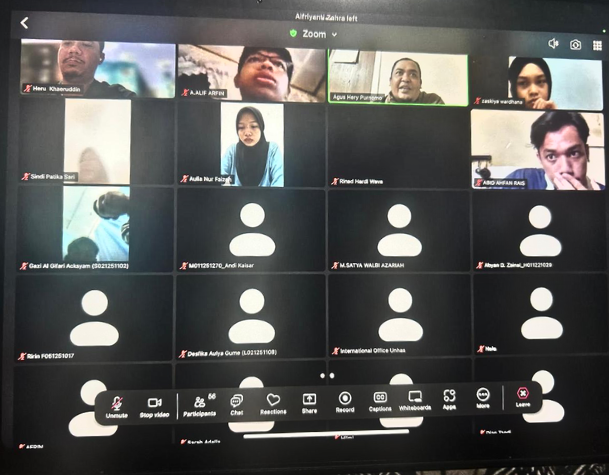
The session was moderated by Khaeruddin, Ph.D., from the IO Taskforce and brought together approximately 60 participants on Zoom, including students, staff, alumni, and members of the public. The active engagement throughout the discussion reflected the continuing enthusiasm of the UNHAS community to pursue international study opportunities.The Friday Outbound Clinic remains a flagship program of IO, designed to equip participants with knowledge, strategies, and motivation to explore global academic pathways. By featuring experienced scholars like Agus Hery Purnomo, the program continues to strengthen the international outlook and preparedness of the UNHAS academic community.