
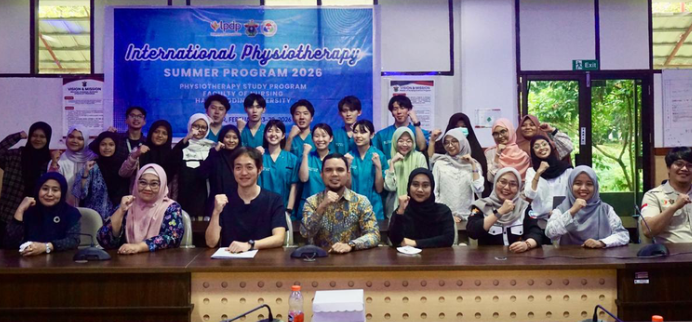
International Physiotherapy Summer Program 2026 Strengthens Global Academic Collaboration
The Department of Physiotherapy, Faculty of Nursing (FKep), Hasanuddin University (UNHAS) successfully organized the International Physiotherapy Summer Program 2026 under the theme “Advancing Physiotherapy Education through Global Academic Exchange” from 23 to 28 February 2026. The program welcomed eight inbound students and their supervisor, Hiroki Yabe, RPT., M.S., Ph.D., from Seirei Christopher University, Japan, who participated alongside 13 physiotherapy students from UNHAS. Officially opened by the Dean of the Faculty of Nursing, Prof. Dr. Elly L. Sjattar, S.Kp., M.Kes, and attended by the Vice Deans for Academic, Resource, and Partnership affairs, the initiative highlighted the Faculty’s strong commitment to international academic collaboration and intercultural understanding.
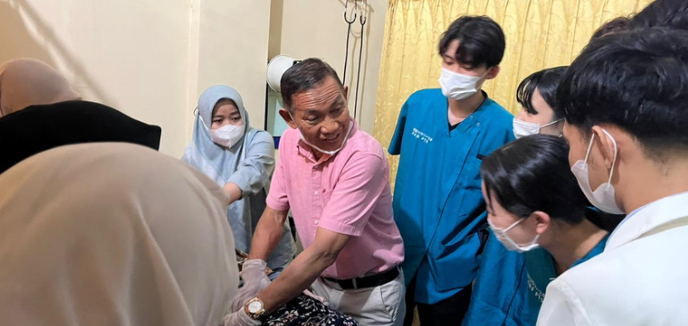
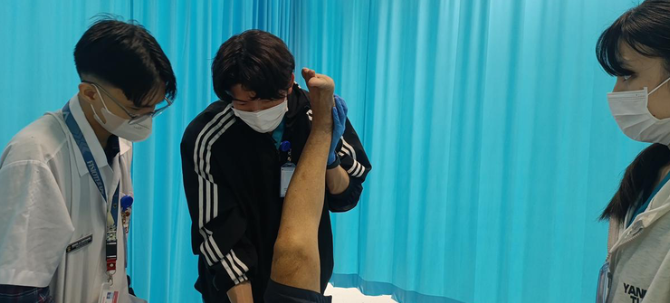
Throughout the six-day program, participants engaged in a series of structured academic and professional activities, including institutional visits, supervised clinical observations, and cultural exchange sessions. A key component involved supervised clinical practice conducted at UNHAS Hospital and Physio Sakti Physiotherapy Clinic. Through these direct observations and guided discussions, students gained practical exposure to physiotherapy services in Indonesia while exchanging diverse perspectives on healthcare systems and rehabilitation practices between both countries.
The International Physiotherapy Summer Program 2026 also aligned closely with the Sustainable Development Goals (SDGs), specifically targeting SDG 3 (Good Health and Well-Being), SDG 4 (Quality Education), and SDG 17 (Partnerships for the Goals). By strengthening the competencies of future physiotherapists and promoting inclusive, internationally oriented educational experiences, the program reinforced the importance of academic collaboration across borders to improve global health outcomes.
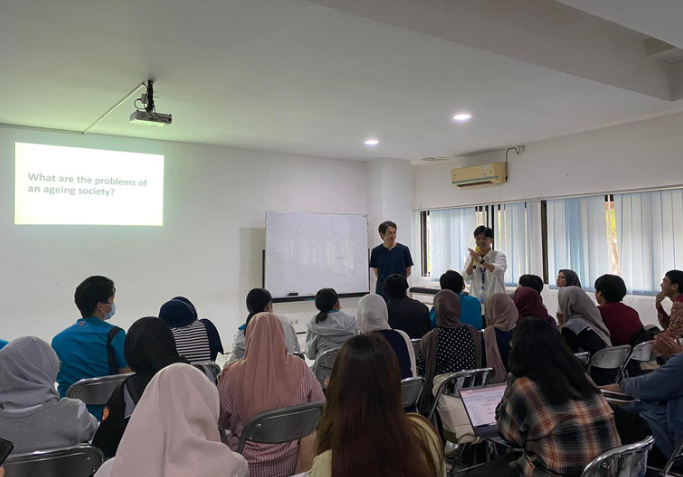
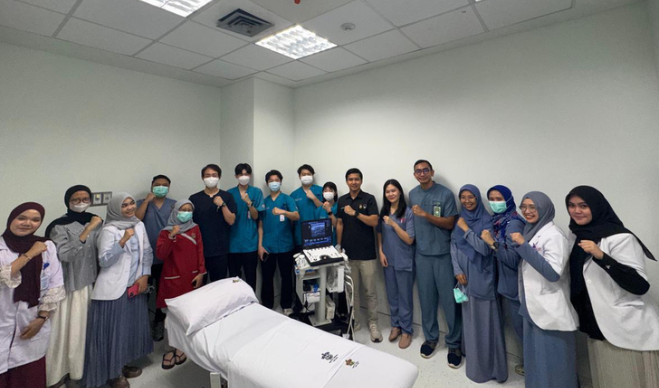
Beyond academic enrichment, the program aimed to develop students’ global competencies, including international communication skills and intercultural sensitivity. The meaningful interaction between Indonesian and Japanese students—both in academic sessions and social activities—created a dynamic learning environment that extended beyond classroom instruction. The successful implementation of this program reflects the Faculty of Nursing’s ongoing commitment to preparing graduates who are adaptive and globally competitive, contributing to sustainable global partnerships in health sciences education.