
KIMI IV–Indonesia–Australia Young Scientists Forum Strengthens Scientific Networks and Science Diplomacy in Makassar
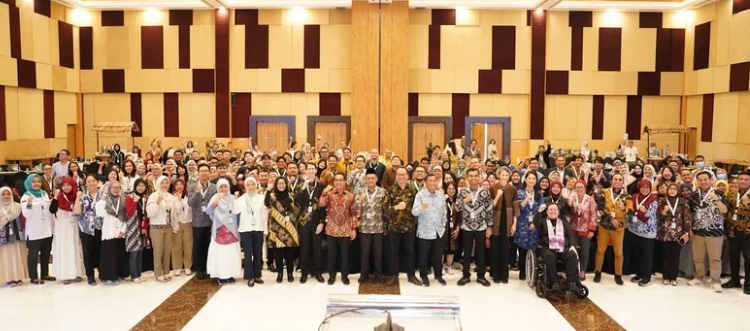
The 4th Indonesian Young Scientists Congress (Kongres Ilmuwan Muda Indonesia/KIMI IV) in conjunction with The 1st Indonesia–Australia Young Scientists Forum event, marked a strategic milestone in strengthening scientific networks and advancing science diplomacy in Indonesia. The international event was organized by the Indonesian Young Academy of Sciences (Akademi Ilmuwan Muda Indonesia/ALMI) in collaboration with Hasanuddin University (UNHAS) and took place at the UNHAS Hotel & Convention Ballroom, Makassar, from 8 to 10 December 2025.

In his keynote address, the Minister of Higher Education, Science, and Technology, Brian Yuliarto, emphasized that KIMI IV serves as an important platform for building scientific alliances and partnerships. He noted that future scientific breakthroughs are unlikely to emerge from a single laboratory, but rather from strong networks and collaborations among thinkers across institutions and countries. According to him, scientific networks play a crucial role in transforming research outputs into solutions that can be widely implemented and deliver tangible benefits to society.
Echoing this view, the Vice Minister of Higher Education, Science, and Technology, Prof. Stella Christie, who officially inaugurated the event, highlighted the changing landscape of international research collaboration. She explained that scientists today no longer need to wait for formal institutional or ministerial mechanisms to initiate cooperation. Instead, direct encounters such as those facilitated by KIMI enable researchers to identify shared research questions and establish meaningful collaborations, particularly between Indonesian and Australian scientists working on similar issues ranging from coastal ecology and microbiology to women’s economics.
Prof. Stella further underlined the government’s renewed focus on research that responds to public needs. She stated that research agendas should be driven by pressing societal challenges, including environmental sustainability, public health, education, and food security. In this context, international collaboration is seen as the most effective way to accelerate solutions to global problems that cannot be addressed by any single country alone.

Meanwhile, the Australian Consul General in Makassar, Mr. Todd Dias, described the Indonesia–Australia young scientists forum as a significant foundation for strengthening scientific networks across Southeast Asia and Oceania. He noted that Makassar holds a strategic position as a growing scientific hub in Eastern Indonesia and that KIMI IV opens opportunities for expanded networking, data exchange, and long-term joint research initiatives between the two countries. In the same forum, ALMI Chair Dr. Lilis Mulyani highlighted Indonesia’s strong pool of young scientists with advanced academic backgrounds, including many graduates of overseas universities, who share a common vision to contribute meaningfully to national development.
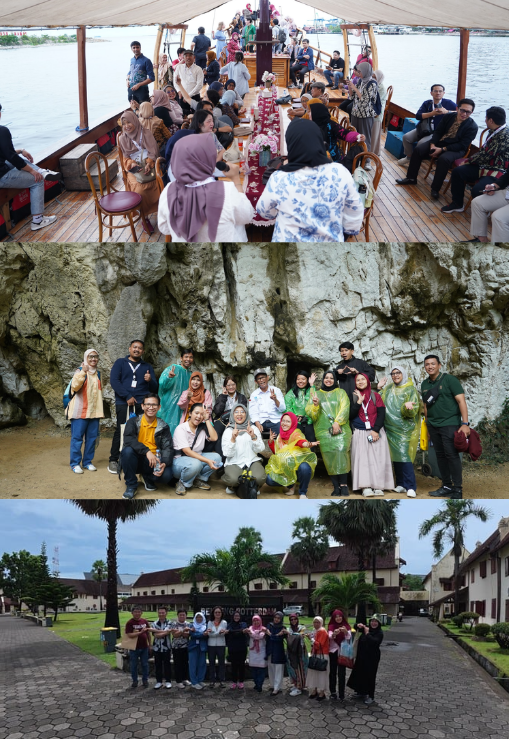
In addition to the scientific sessions, participants also took part in cultural and educational activities designed to showcase South Sulawesi’s local heritage. The young scientists enjoyed an evening cruise aboard a traditional Phinisi boat sailing around the Makassar Strait, where they were served a variety of traditional Makassar dishes. The program was further enriched by excursions to the Leang-Leang Geopark in Maros Regency. The visit to Leang-Leang was facilitated by Ilham Alimuddin, Ph.D and Saaduddin, Ph.D. Another visit was to Fort Rotterdam, offering participants insights into the region’s cultural, historical, and natural heritage.
These two big events were fully supported by KONEKSI (Kolaborasi untuk Inovasi dan Ketahanan)—an Australia–Indonesia partnership program that promotes collaborative research and innovation to strengthen social and economic resilience, with a strong commitment to gender equality, disability inclusion, and evidence-based policymaking—alongside UNHAS. This support reflects a shared commitment to fostering young scientists, advancing inclusive and impactful scientific collaboration, and strengthening the role of higher education institutions in addressing regional and global challenges.