
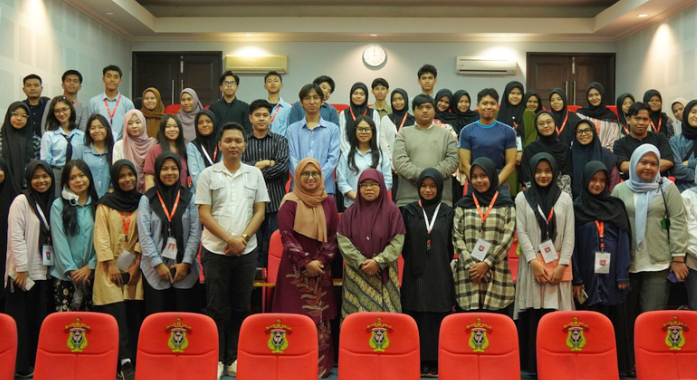
International Guest Lecture Highlights Policy Perception and Governance Dynamics in Terengganu, Malaysia
The Faculty of Social and Political Sciences (FISIP), Hasanuddin University (UNHAS), held an international guest lecture featuring Dr. Phil. Nor Azura A. Rahman from the School of International Studies, Universiti Utara Malaysia on 18 November 2025. The event, which took place at the Prof. Syukur Abdullah Auditorium, carried the theme “Perception and Support of Public Servants in the State of Terengganu toward the Terengganu State Government.”
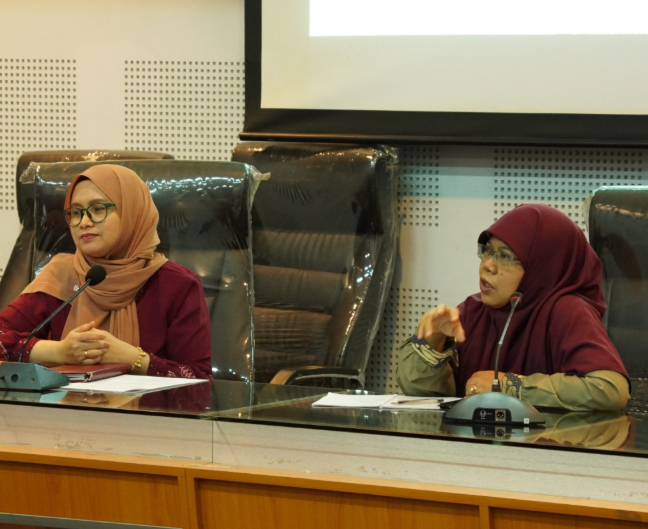
Dr. Nor Azura, in her presentation, shared extensive research findings on the perceptions, support levels, and factors influencing civil servants (penjawat awam) in Terengganu regarding the implementation of the state government’s policies. The data presented forms part of a broader field study conducted with a team of researchers. These research findings are Firstly, high confidence in state leadership: There is a strong trust in the integrity and credibility of the Menteri Besar and EXCO from the respondents who are civil servants. It can be seen on the highest score of leadership perception among all indicator’s measurements. Secondly, positive acceptance of state policies: Most respondents have a positive perception on the state’s major policies that contribute to increasing public welfare, transparency, and communication with citizens of Trengganu state.
However, in terms of implementation level, the research identifies several obstacles in policy execution, including limited resources, time constraints, insufficient training, and external interference. The effectiveness of policy implementation should be supported not only by good design but also readiness of institutions. Then, research also finds that respondents have a lack of understanding of the Terengganu Sejahtera Master Plan (PITAS2030). The underscoring demands an improvement in communication across government organizations. Finally, the survey also showed the gaps perception across organizations such as federal agencies and government-linked companies (GLCS). Therefore, it is suggested the better inter-agency alignment in policy implementation.
The participants of the general stadium consisting of FISIP students and lecturers were enlightened on the dynamics of leadership and the relationship between civil servants and the government in Malaysia. At the same time, it is also a comparative study of the political system that prevails in Indonesia and Malaysia in the context of government, bureaucracy and the attachment of their citizens. This activity is a form of Fisip’s commitment to strengthen the international cooperation network which will bring its academic community to enrich understanding of current governance issues that occur in fellow ASEAN member countries. Guided by Nuvida Raf, some audience delivered their curiosities to aspects of the survey indicators such as gender issues that could influence the differences respondents’ views on policy of Malaysian government.